Webmaster No Comments

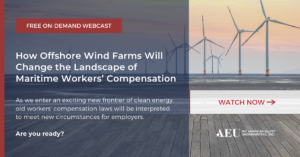
On-Demand Webcast: Winds of Change: How Offshore Wind Farms Will Change the Landscape of Maritime Workers’ Compensation

Offshore Wind WebcastWind energy is poised to eventually be the dominant source of power in the United States.

As companies ramp up their workforce to support activities related to wind farm construction and maintenance, it’s critical to understand the various workers’ compensation laws that impact this sector. In this webcast, our Dan Bookham joins colleagues from American Equity Underwriters to discuss:

  • The various workers’ compensation laws that impact the wind energy sector
  • Jurisdiction issues unique to offshore wind farms
  • Old laws that will be interpreted to meet new circumstances

View the webcast: https://loom.ly/bbj7q4w

Webmaster No Comments

Checklist: Winter Storage for Boats

Source: PatriotInsuranceco.com

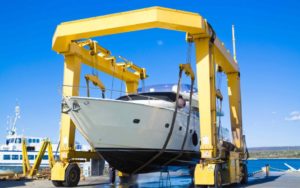
winter-storage-for-boats-scaled-2-1080x675Sadly, boating season will come to an end soon, and Old Man Winter will be paving the way for snowmobiles. Winter storage for boats takes some careful planning. If you follow a checklist, winterizing your boat can be easy, ensuring your boat will be in great shape come spring.

For safe winter storage for your boat, follow our checklist:

Inspect for damage.

  • Thoroughly inspect the boat for any damage. Repair now, if possible.
  • Check electrical systems and appliances to make sure they are functioning properly (make repairs before storing the boat, if possible).
  • Check the battery to make sure it is fully charged before storing.

Prep the fuel system.

  • Fill the fuel tank but leave enough room for expansion.
  • Treat the fuel with a stabilizer, then run the engine for 10 minutes to get it circulating throughout the engine.
  • Seal the fuel valves.

Winterize the engine.

  • Change the oil and replace filters.
  • Flush the engine with fresh water, then let it drain.
  • Wash the engine with soap and water. Rinse thoroughly.
  • Fog the engine cylinders with an aerosol fogging solution.
  • Lubricate the engine’s grease fittings.

Flush the cooling system.

  • Drain any remaining coolant.
  • Run a less toxic propylene glycol antifreeze through the system.

Clean inside and out.

  • Clean the boat inside and out, removing any plant life or barnacles.
  • Remove any valuables from inside the boat.
  • Take out any food or drinks.
  • Bring home any cushions and store them in a cool, dry place.

Store your boat.

  • Remove the battery and store it in a safe, dry spot.
  • Consider purchasing a dehumidifier for the storage area to help prevent mildew.
  • Lock your boat (and leave a key with the marina manager, if applicable).
  • Cover and store your boat.
  • Check your boat periodically or have the marina check it and report to you.

Then, when spring comes around, make sure you have the right protection for your boat. Talk to an Allen Insurance representative about boat insurance.

Webmaster No Comments

Meesha Luce Earns Safeco Insurance® Award of Excellence for Superior Underwriting Skill

Meesha Luce, ACSR

Meesha Luce

Meesha Luce, ACSR, a personal insurance account executive with Allen Insurance and Financial has earned the Safeco Insurance Award of Excellence, an honor recognizing superior underwriting skill.

This is Luce’s sixth consecutive year earning this recognition, which is achieved only by a select group of agents across the country who sell Safeco Insurance.

“Meesha is part of a personal insurance team working hard every day to make sure we deliver the highest level of service to our customers. We are all very proud to say that Meesha is again part of this elite group of insurance agents honored by Safeco,” said Michael Pierce, president of Allen Insurance and Financial.

The Safeco Award of Excellence honors outstanding agents who have developed a solid underwriting relationship with Safeco and whose agencies have qualified for the Safeco Insurance Premier Partner Award, the company’s top recognition program. Fewer than 10% of agencies who sell Safeco have agents who receive this award.

Luce, a resident of Jefferson, joined Allen Insurance and Financial in 2006. She has been a member of the Maine Insurance Agents Association Young Agents Committee since 2013, was named Maine’s Young Professional of the Year in 2017 and is the vice chairman of the Maine Young Agents Committee.

Allen Insurance and Financial is a multi-year President’s Award and Premier Partner agency, recognition given only to the best independent insurance agencies that sell Safeco. Safeco is a Liberty Mutual Insurance company.

Webmaster No Comments

Insurance Superintendent Says Even Mainers Outside of Flood Zones Should Consider Flood Insurance

From the Maine Bureau of Insurance, 6/1/2020

With the National Oceanic and Atmospheric Administration (NOAA) predicting more named storms, more hurricanes and more major hurricanes during the 2020 Atlantic hurricane season, Maine Insurance Superintendent Eric Cioppa strongly recommends that all Mainers consider purchasing flood insurance, even those who live outside of federally designated flood zones.

The Federal Emergency Management Agency (FEMA) reports that in recent years hurricanes have caused above average flooding, with more than 40% of flood claims submitted from outside of high-risk flood areas between the years 2014 and 2018.

“No matter where we live, it’s important that we all understand our flood risk, and what it could cost us,” Cioppa said. “Don’t wait until there’s an imminent threat. Now is the time to call your agent to get a quote and purchase coverage. You can purchase a flood insurance policy at any time, but there is usually a 30-day waiting period for coverage to take effect.”

Mortgage lenders generally require homes in flood zones to have flood coverage, but it is usually an optional purchase for all others. Many people assume incorrectly that their basic homeowners or renters insurance policy will cover damage from flooding, but flood coverage must almost always be purchased separately.

A homeowners or renters policy may pay for water damage inside a house, such as damage from an ice dam or a burst pipe, but it will usually not pay for unusual or rapid accumulation or runoff of surface waters, such as those caused by snowmelt or torrential, soaking rain.

The Atlantic hurricane season officially runs between June 1 and November 30 each year.

Recommended related resources include:

Flood Insurance: Details are available from the National Flood Insurance Program (NFIP) by calling 1-800-427-4661 or online at https://www.floodsmart.gov.

Inventory Checklist: A checklist can help establish an insurance claim. Start one at https://www.maine.gov/insurance/consumer/individualsfamilies/homeownersrenters/homeinventorychecklist.html and keep a hard copy in a secure location away from your home, with insurance policies, medical records, and other important documents.

Emergency Preparedness: For information about preparing yourself and family for emergency situations, such as floods, storms, power outages and home fires, visit https://www.ready.gov/ The Maine Emergency Management Agency (MEMA) provides Maine specific information at https://www.maine.gov/mema/maine-prepares/.

Consumers with questions about insurance matters can obtain information and assistance from the Maine Bureau of Insurance by visiting maine.gov/insurance, calling 800-300-5000 (TTY 711), or e-mailing email hidden; JavaScript is required

Webmaster No Comments

Current Topic: Employment Practices Liability Insurance

In the time of COVID-19, employers in Maine and across the country have had to make numerous and significant decisions about how to manage their business, developing and implementing policies and procedures addressing remote work, layoffs, furloughs, pay cuts, workplace conditions, and a host of other issues.

Employment Practices Liability Insurance for employers covers employment-related liabilities other than on-the-job injuries. This can include legal fees and damages for suits such as wrongful termination, discrimination, sexual harassment and other alleged violations of employees’ legal rights.

Recognizing that smaller companies now need this kind of protection, some insurers provide this coverage as an endorsement to their Business owners Policy (BOP). An endorsement changes the terms and conditions of the policy. Other companies offer EPLI as a stand-alone coverage.

The cost of EPLI coverage depends on your type of business, the number of employees you have and various risk factors such as whether your company has been sued over employment practices in the past. The policies may reimburse your company against the costs of defending a lawsuit in court and for judgments and settlements.

Your EPLI policy could cover legal costs, whether your company wins or loses the suit. Policies also typically do not pay for punitive damages or civil or criminal fines. Liabilities covered by other insurance policies such as workers compensation are excluded from EPLI policies.

The number of lawsuits filed by employees against their employers has been rising, especially during the current pandemic. While most suits are filed against large corporations, no company is immune to such lawsuits.

These are important and complicated matters. We find the best way to address them is by personal conversation. We’re here to help.

Source: Insurance Information Institute

Webmaster No Comments

Insurance for Aquaculture Operations

Insurance is just one tool used to manage risk for a business. This basic guide is designed to help make you aware of the various exposures you may have and the types of insurance protection available. Identifying risk and determining methods and techniques to address that risk is the key to our relationships with our clients.

Aquaculture businesses offer a unique combination of activities and exposures which are both land and water based – and results in a unique set of risks. You should always feel free to ask questions of your insurance agent.

THERE ARE POLICIES TO PROTECT

Liability arising out of your operations or the products you sell: Commercial general liability insurance is a standard insurance policy issued to businesses to protect them against 3rd party liability claims for bodily injury and property damage arising out of premises they own, operations they conduct and products they sell.

Your property: Insurance can cover physical assets which can be classified as real property – this includes buildings and structures built on the land and business personal property (contents), which includes furnishings, fixtures and equipment and inventory in/on or adjacent to those structures.

Your equipment: Coverage known as inland marine insurance is property insurance designed to cover the things which can be moved around (mobile equipment, gear, etc.).

Shipment of your property: Transportation insurance is a policy offering coverage on the insured’s property while it is in overland transit from one location to another on any necessary mode of transport, including transport by land, air and water. Coverage applies when insurance is desired on property owned by you, whether the property is shipped in your vehicles or in public conveyances. Coverage can include spoilage arising from overturn or failure of refrigerating equipment

Shipment of your product overseas: Ocean cargo insurance is a type of insurance covering goods being shipped overseas (air or ocean), with coverage provided from the point of origin (your place) to final destination.

Piers/docks/wharves insurance: This provides property insurance for your (owned or leased by you) piers, wharves and docks, floats, platforms, gangplanks, pilings, wiring, pipes, (water lines, gas lines, electrical power, lighting fixtures and equipment permanently affixed).

Your heating-cooling-refrigerating-circulating equipment: Equipment breakdown insurance provides coverage for loss due to mechanical or electrical breakdown of equipment, Coverage applies to the cost to repair or replace the equipment and any other property damaged by equipment breakdown. (Spoilage of your product.)

Your money/your assets: Commercial crime insurance protects a business from losses arising out of business-related crime. Protection through the policy can cover cash, assets, merchandise or other property loss when someone perpetrates fraud, embezzlement, forgery, misrepresentation, robbery, theft or any other type of business‐related crime on the company.

Any and all online activities: Cyber insurance is designed to cover consumers of technology services or products. More specifically, these policies are intended to cover a variety of both liability and property losses which may result when a business engages in various electronic activities, such as e-commerce, collecting confidential data (customers & employees) within an internal electronic network and the myriad of banking activities. An increasing exposure is created by connection to the grid for utility services and the operation of manufacturing equipment with Internet or cloud-based systems.

Damage to your vessel(s) including barges and floating work platforms: Commercial hull insurance provides coverage for physical loss or damage to a vessel’s hull and machinery (for those listed on your policy). Trailers can be included on a hull policy as can coverage for simple pollution cleanup.

Liability arising out of your ownership and operation of vessel(s): Protection & Indemnity provides coverage for a vessel owner’s or operator’s liabilities arising out of the operation of vessels listed on your policy such as damage to third party property, third party bodily injury or injury/death to a crew member.

Clean up and expenses arising out of a pollution event: This is a type of coverage created specifically to manage the costs associated with pollution clean-up (from a vessel) as defined in the Oil Pollution Act of 1990 and or state and local regulations.

Vehicles and trailers you own or lease: A commercial auto policy includes auto liability (injury or property damage to a 3rd party) and auto physical damage coverages (comprehensive & collision) as well as medical payments for passengers within your vehicle (excluding employees).

Injury to your employees: Coverage for injury to an employee may be provided by either your state act workers compensation or the Jones Act. Understanding which applies to your employees is essential to managing this risk.

Employment practices liability: This type of liability insurance covers wrongful acts arising from the employment process. The most frequent types of claims covered under such policies include: wrongful termination, discrimination, sexual harassment and retaliation.

You may want or need a number of insurance policies (including those listed above or others), depending on your operations, activities and your appetite for risk.

Your insurance policies may all come from the same company or they may come from several different companies. As an independent insurance agent, we can help you identify risk, formulate solutions to address those risks and develop insurance coverage appropriate and specific to your business.

Information provided by:
Sally Carlisle
94 High St.
Belfast, ME 04915
800-439-4311

Webmaster No Comments

Health Benefits – Information Update – 4/6/2020

By Sherree L. Craig, CEBS

Sherree L. Craig, CEBS

Sherree L. Craig, CEBS

Bravo to the businesses continuing uninterrupted, but changed, right now.

As you may be struggling to maintain your footing in business, your employees need some assurances and an understanding of what might happen with their oh-so-important-now health benefits in the event of a reduction in their work hours, a temporary layoff, a furlough, or if a termination of employment becomes necessary.

• Maine Insurance Code Update. By order of Governor Mills, an employer may continue to insure employees during an interruption to their employment. If an employer chooses this option, this offer must be made to “all affected employees on a non-discriminatory basis.”

• COBRA/mini-COBRA. Federal law requires companies with 20 or more employees to offer continuous group health plan coverage to qualified beneficiaries for a certain period of time, depending on the qualifying event. In Maine, employees working for a company with fewer than 20 employees also have a continuation of coverage opportunity in the event of a temporary layoff. This mini-COBRA protection can extend for up to 12 months and can be paid by the employee or company. The insurance company should be notified of this status change, but the employee’s coverage will be maintained on your group bill. It is important to note that if your company is officially out of business, these options are no longer available.

• Healthcare.gov Special Enrollment Opportunity. Employees should be encouraged to review this chance to enroll on the Federal Healthcare Exchange in a timely manner. The loss of group health insurance is considered a qualifying event (unless for non-payment of premiums). This is the time to enroll and apply for subsidies. It must be done at the termination of the group health coverage or at the end of a COBRA election period. They cannot elect COBRA for a few months and then try to switch to the Exchange.

• MaineCare. Due to the expansion of MaineCare eligibility, many of your employees may find themselves eligible for this program. They may apply for coverage or check eligibility at www.maine.gov/mymaineconnection.

If you have questions about this topic, or other federal requirements for continuation of coverage during a medical leave, I encourage you to reach out to your insurance benefits professional.

Wishing you all the best for your health and success.

Webmaster No Comments

Anna Moorman Recognized for 2019 Sales

Anna Moorman

Anna Moorman

Anna Moorman of Allen Insurance and Financial has been recognized for Medicare supplement sales in 2019 by Anthem, one of the largest Medicare supplement carriers in the state of Maine.

Moorman is one of two agents at Allen Insurance and Financial who specialize in the complex market of Medicare insurance, working with a number of insurance carriers to give customers a range of choices to suit their needs. Moorman has been with Allen Insurance and Financial since 2012.

The Anthem award was announced in Portland on Feb. 25. This is the fifth consecutive year that Moorman has received an award from Anthem for Medicare sales; for 2019 she was named one of Anthem’s top 10 sales leaders.

“This award indicates that Anna’s clients appreciate the way she simplifies the process,” said Michael Pierce, company president. “And that’s key, because our goal is to provide dedicated, one-on-one attention to our Medicare customers, assessing each person’s needs and finding options that will align with their budget and healthcare goals.”

Webmaster No Comments

Sherree L. Craig Now Licensed as an Insurance Consultant in Maine

Sherree L. Craig, CEBS

Sherree L. Craig, CEBS

Sherree L. Craig, CEBS, Senior Account Executive in the Benefits Division at Allen Insurance and Financial, is now a licensed insurance consultant in Maine.

“Sherree’s efforts demonstrate her deep commitment to continuing professional development,” said Mike Pierce, company president. “This commitment is important to all of our insurance divisions but it is especially so in the always-changing field of employee benefits.”

Craig holds Fellowship standing in the International Society of Certified Employee Benefit Specialists through the Wharton School of Business, and an advanced certification in self-funding from the National Association of Health Underwriters.

Webmaster No Comments

When a Collision is not a Collision

By Chris Richmond
Originally submitted to WorkBoat Magazine / January2021Chris Richmond, Allen Insurance and Financial

A client’s vessel was tied to the dock, unloading its catch. Another fishing vessel struck his boat while backing out. The offending captain said not to worry, that he had excellent coverage and passed along his insurance agent’s contact information. After a couple of weeks of dealing with the other company’s adjustor, my client was informed that there was no coverage for this claim. The owner who had struck him had hull coverage, but no liability.

If you have a lender involved with your vessel, most likely they will require proof of hull coverage to protect their interests. What they do not ask for is proof of protection and indemnity (P&I) coverage. These are two separate policies that provide different coverages for your commercial vessel. P&I provides coverage for any crew and passengers, as well as any damage to something you hit, whether it be another vessel or a pier. Your hull insurance provides coverage for damage to your vessel, wreck removal and collision liability up to the limits of your hull coverage.

But when is a collision not a collision? You might think that in the case mentioned above that a collision occurred − one vessel ran into another. But because one boat was secured to a dock and not moving, the event became an allision. In the insurance world, when one vessel strikes another moving vessel, this is a collision. When a vessel strikes a fixed or non-moving object, this is an allision.

In our client’s claim, he was secured to the dock. It was an allision, which would normally be covered under the P&I policy. As the other vessel did not have P&I, the claim was denied. Fortunately, in this case our client’s insurance company stepped in and covered the claim. The insurance company then has the option to go after the vessel owner to recover payments for the loss.

By opting to not carry P&I, a vessel owner opens himself up to a wide range of potential claims that would not be paid. Each part of a commercial vessel’s policy is specifically worded to cover certain parts of a vessel, as well as its operation. Don’t make the mistake of thinking some coverage is better than none.